
Stories That Move
A collaboration between MAD Courses and DoorNumberOne.org, exclusively for schools enrolled in the Climate Action Accelerator Program (CAAP).
Grow your digital storytelling skills — and share your film across CAAP schools and beyond.
Tell stories that matter to you, from your local community.
Build future-ready skills in content creation, creativity and empathy.
Share your story with a global audience of filmmakers.

'Stories That Move' is a collaboration between DoorNumberOne.org and Make A Difference (MAD) Courses. Here's how it works:

Take the Docathon course:
A self-paced, beginner-friendly learning experience that can be taken inside or outside the classroom.


* Most students use mobile phones
1️⃣ Share — Online Global Showcase (April 2026)
Share across the CAAP school network, and then with the world! Screen your documentary online with other young filmmakers, and discuss the real-world issues behind the stories.
2️⃣ Celebrate — In Person event during Toronto Climate Week. (June 2026)
A selection of the most compelling films will be screened during Climate Week (date and venue TBC), with an audience of students, educators, and community leaders.
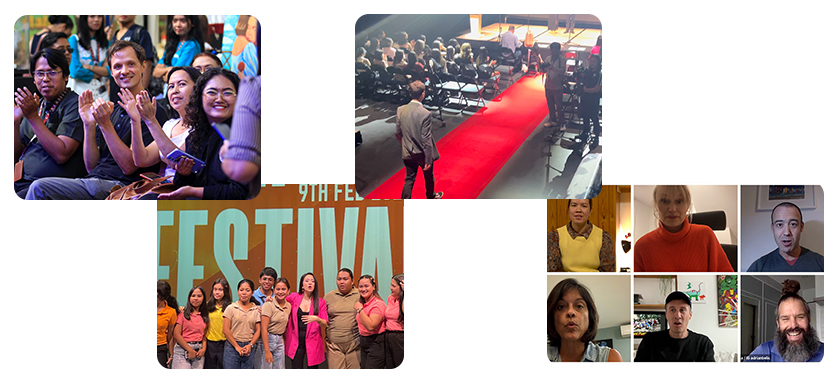
3️⃣ Get Global Recognition (4 June 2026)
Lead a short reflection activity for peers, and earn the Impactful Storytelling Credential with RMIT University in Melbourne — a recognised achievement you can add to your portfolio.


The Docathon course outlined below can be easily rolled out with students - whether it is in your curriculum or alongside it. Suji DeHart, MAD's curriculum head, will work with you for the optimum roll-out experience.
Welcome to Docathon!
Everything You Need to Know
Student Action Notebook
Live Mentorship
Introduction
Why Tell a Purposeful Story?
Many Ways to Serve a Purpose
Looking at Purpose in a Docathon Film
What Purpose?
Introduction
It's about CONNECTION
Circle of Concern Activity
Did you Find a Story?
A key to good filmmaking
Notes on your Student Action Notebook
Watch this Docathon film from Guatemala!
Meet international mentor, Kevin
What did our judges think?
Creating a Compelling Narrative
The Storytelling Framework
Watch & Apply – Storytelling in Action
Practice Time!
A filmmaking secret
3 questions you need to ask yourself
Asking Meaningful Questions
Types of Meaningful Questions or Prompts
Student Action Notebook activity
Exploring Below the Surface
Iceberg Model Explained
Let's Practice Pt. 1: Watch Mark's story
Let's Practice Pt. 2: Levels of the Iceberg Quiz
Let's Practice Pt. 3: Check for Understanding
Let's Practice Pt. 4: Drag & Drop Iceberg
Apply the Iceberg Model to Your Story
A final word about Digging Deeper

Visit the Docathon website if you would like to know more about other Docathons worldwide. Docathon is initiative of MAD Courses (learn more about MAD Courses below).
DoorNumberOne.org is a nonprofit organization that partners with primary and secondary schools to catalyze bold climate and nature-action initiatives, helping them develop whole-school plans for a just and regenerated world.

MAD Courses empowers young people to become storytellers and changemakers through creative, purpose-driven filmmaking.
Docathon is open to students in grades 6–12. No prior filmmaking experience is required—resources and mentorship are provided.
All films should be between 3–6 minutes.
The main language for Docathon is English. However, local languages are welcome (even encouraged!) as long as English subtitles are included.
A mobile phone is enough to film your documentary. You can also use cameras, microphones, and editing software like CapCut, iMovie, or Adobe Premiere Pro if available.
We recommend forming groups of up to five students, as filmmaking is often more fun and collaborative. But if you’d prefer to work solo, that is also possible.
Docathon costs 350 USD per film group, for up to 5 students working on the same film . This includes access to the training course, mentorship, and entry into our Global events.
The Docathon course itself takes about 2 hours to complete. However, to put the principles into practice and create your film, you’ll need more time. We recommend working gradually over 3-5 weeks to get the best results.