
Dubai Docathon
Create a short, impactful documentary — then share it with students from the UAE, and beyond.
Grow skills. Share your voice. Make a real impact.
Tell stories that matter to you, from your local community - and share them with the world!
Build future-ready skills, while evidencing you engagement with sustainability and global citizenship
Create a great film in as little as a weekend

Date: April 22, 2026

About the event
The Dubai Docathon will be hosted at The Arbor School.
Students and teachers are invited to take part either by presenting a student-made documentary or by attending to watch and learn from the films created by peers from across the region.
This year’s Docathon theme is Bridging the Gap — focusing on stories that help important voices be heard.
Students might interpret the theme by:
Exploring a gap related to an issue, voice, representation, or understanding — a story that is overlooked, unheard, or misunderstood
Telling the story of someone who is building a bridge through their actions, experiences, and voice to create understanding and impact

Prompted by a Docathon theme, students create a 3–6 minute documentary around a real issue in their local community.
They are supported through:
The Docathon ‘Sprint’ course can be completed in a few hours, while the extended version can be integrated into a 6–10 week curriculum.
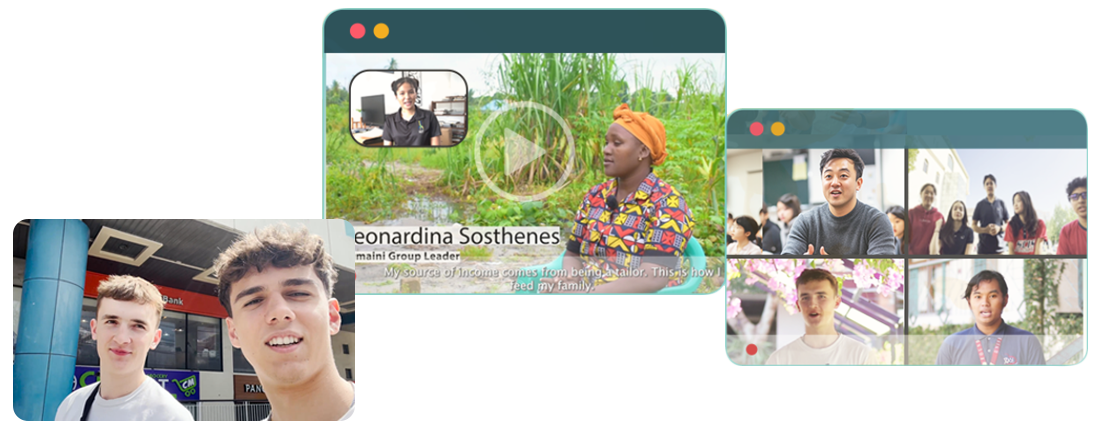

Students share their films with a real audience at a Docathon event. Films can be showcased through:
Live in person screenings (selected films only*)
Online Student Film Exchanges, connecting students across countries.
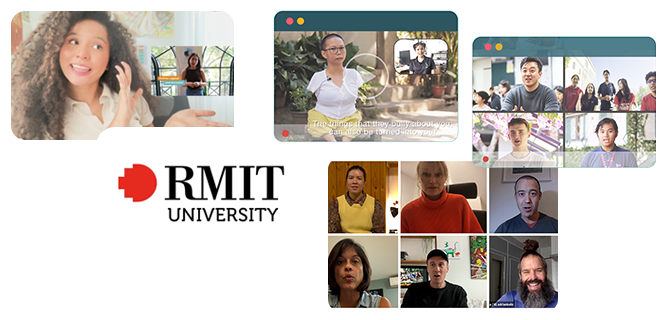
Participating students earn the Global Perspectives Leader Credential from RMIT University
If your students are unable to attend this specific event, they can still share their films through other Docathon events worldwide. Learn more at madcourses.com.
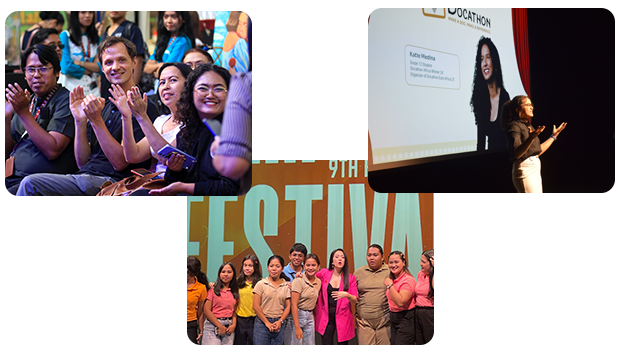

Schools and students can organise a Docathon event of their own.
Schools can host a Docathon event and invite local schools
Standout students can earn leadership credentials (digital certificates) by leading workshops or screenings to inspire others
Docathons take place on a regular basis across the world. Visit the Docathon website if you would like to know more.

Docathon is initiative of MAD (Make A Difference) Courses, an organisation which, since 2019, has been leveraging the power of purpose-driven storytelling to create meaningful change in the world.
At The Arbor School, we believe education should nurture both people and planet. Rooted in sustainability, wellbeing, and community, the school empowers students to learn through real-world experiences, develop empathy, and use their voices to create positive change — locally and globally.
Please see the full Docathon course below. A 'Sprint' Version is also available, making it possible to finish the course in a few hours, and make a film in just a few days.
Welcome to Docathon!
Everything You Need to Know
Student Action Notebook
Live Mentorship
Introduction
Why Tell a Purposeful Story?
Many Ways to Serve a Purpose
Looking at Purpose in a Docathon Film
What Purpose?
A filmmaking secret
3 questions you need to ask yourself
Asking Meaningful Questions
Types of Meaningful Questions or Prompts
Student Action Notebook activity
Introducing your Storyboarding mentor
Storyboarding - What and Why?
Storyboarding Techniques
Storyboarding Tips & Tricks
Practice Storyboarding
From Storyboard to Shot List
Download a Shot List Template
It's time to film! What you need to know
Types of Shots
B-Roll
Audio
DOs and DON'Ts: Filming Quiz
Getting permission to film
Let's film!
It's time to edit your film!
Narrative
A quick summary of next steps
Video Editors
Sound and Music
Graphics
DOs and DON'Ts: Editing Quiz

Docathon is open to students in grades 6–12. No prior filmmaking experience is required - 99% of participants have never made a film before. Our training materials and mentorship will guide you all the way.
No. All teams must complete the learning journey because our training materials ensure: Fairness — everyone uses the same skills and guidelines. Quality & Alignment — films clearly connect to the theme and criteria. Safety & Ethics — students learn essential guidance before filming. We also offer a Sprint Course for students who are short on time, giving them all the essential fundamentals.
The Docathon showcase events (held during plenary sessions) have limited screening slots, so not every film can be shown. However, every student filmmaker will still have the chance to share their work with a real audience — through our student film exchange, by contributing to a workshop at one of our events, or by hosting a showcase/workshop in your own school with our support.
A mobile phone is enough to film your documentary. You can also use cameras, microphones, and editing software like CapCut, iMovie, or Adobe Premiere Pro if available.
The fee is 350 USD per group of up to 5 students. This keeps the cost affordable for schools, while enabling us to provide a personalised coach per team. If you wish to take part as an individual, and cannot find any colleagues to join you, get in touch and we'll see how we can assist you.
The 'spint' version of the Docathon course takes under an hour to complete. Creating the film will take more time — students have been known to complete a film in a weekend, although we recommend at least 3-4 weeks for the best results. Teachers who choose to integrate Docathon into their curriculum or run it as an ECA can also roll it out over 6–10 weeks, allowing more space for research, reflection, and deeper storytelling.
Highly motivated students can complete a film independently, but we recommend having at least one supervising teacher (no filmmaking experience needed). This teacher simply helps coordinate check-ins with the mentor, keeps students on track, and ensures communication runs smoothly.
The only guideline is that your film should clearly connect to the Docathon theme. Beyond that, you’re free to be as imaginative and expressive as you like.